The Lesson That Started It All
Years ago, when I moved to Devon to take up a new role as head teacher at a small preschool, I never imagined a group (an army of) of caterpillars would spark a lifelong fascination with nature’s transformations – and eventually inspire my Monarch butterfly fabric designs. The school owner, who went on maternity leave, handed me a few tiny caterpillars from her garden for the children to observe. Neither of us were exactly au faitwith what species they were, only that it was an opportunity to witness the butterfly life cycle up close.
Each day the children fed our hungry caterpillars and watched them grow rounder, fatter, more restless. Then, just as we were preparing for cocoons and colourful butterflies, I discovered – after a late-night rabbit hole of internet research – that they weren’t butterfly caterpillars at all but moths! They didn’t want a twig to hang from but soil to bury into. Overnight, our “butterfly project” had to be rewritten.
It was messy, funny, and memorable. To this day I still think those children (all grown up now) believe caterpillars change into butterflies and then moths. It was a perfect reminder that learning – and nature – doesn’t always follow our plans.
Lessons in Observation
That moment stayed with me and still makes me smile. Watching the children adapt their drawings and stories reminded me how creativity begins with curiosity. Those early classroom experiments taught me to slow down and observe before trying to control the outcome. Years later, that same practice would shape how I approach my surface pattern design inspired by nature.
From Devon to Houston: Raising Monarchs
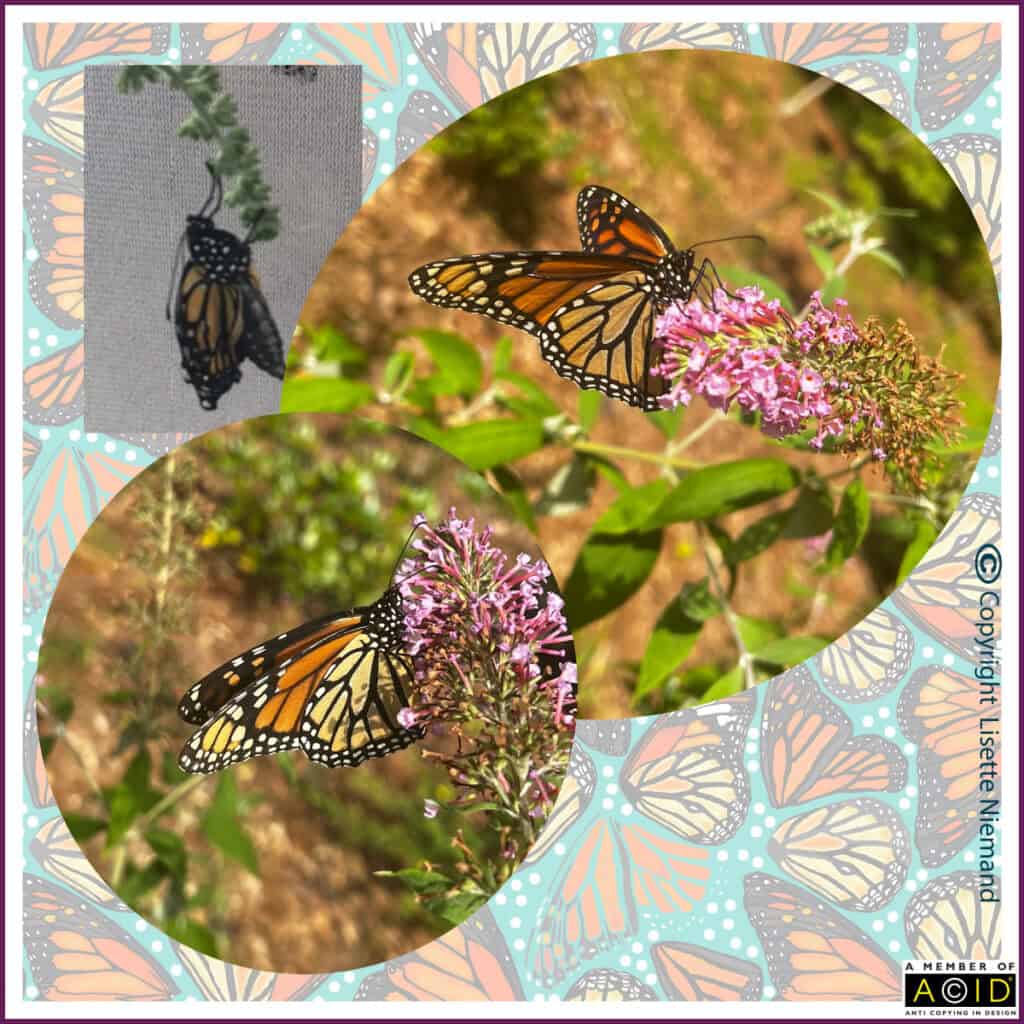
Fast-forward a few years, and I found myself living in Houston, Texas – surrounded by milkweed and the unmistakable orange-and-black flash of Monarch butterflies. This time I knew exactly what I was doing, with a little help from an expert. I raised caterpillars through every stage: from tiny striped feeders to delicate chrysalises, then into shimmering wings ready for release.
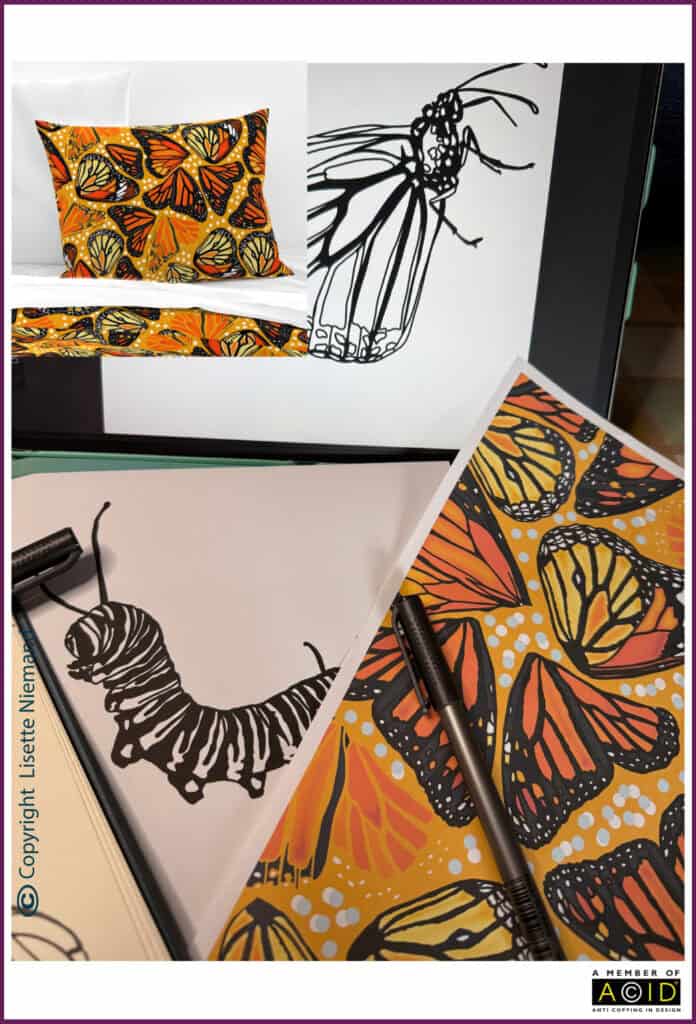
Each transformation felt miraculous. Their vivid colours and perfect symmetry re-ignited that same wonder I saw in my students years before. I photographed the stages, sketched the wings, and used those drawings as the starting point for new textile motifs – the first steps toward what would become my Monarch Butterfly fabric design series.
Turning Nature’s Lessons into Design
Every collection I create under my brand, SassiNiemand, begins with that same sense of discovery. I have millions (okay, a bit of an exaggeration – but loads) of photos of flowers or single petals; it’s hard to find family photos in between them. Every flower seems hand-painted in a way I want to represent in my work.
Nature leads, and I follow. Whether I’m designing artist-designed textiles, wallpaper, or home décor, I return to those moments of quiet observation – the texture of a leaf, the pattern of a wing, the rhythm of repetition in nature’s details. That teaching experience taught me flexibility, and nature continues to teach me patience. Both influence how I design today.
The Pattern Comes Full Circle
Looking back, I realise that art and teaching share the same foundation: creativity, curiosity, transformation, and a willingness to learn from surprises. Those Devon “butterfly” caterpillars (moths!) started it all, and the Monarchs helped complete the circle.
Every new design is another lesson in observation – proof that creativity, like nature, never really stops evolving.
Explore my Monarch Butterfly fabric and other nature-inspired surface pattern designs on Spoonflower, or visit my Fabric page to see more of my collections.
If you’ve followed my earlier stories — like How I Learned Surface Pattern Design — you’ll know each collection begins with a moment of observation