
A Little More Structure This February | Creative Organisation for Designers | SassiNiemand
When February Gets Real
February is usually the month when January enthusiasm settles into reality. The shiny new plans either start to feel manageable… or slightly overwhelming.
This year, I’m choosing manageable.
Instead of adding more goals, I’m refining what’s already here. This February has quietly become a month of creative organisation in my studio. A little more structure. A little more clarity. No dramatic changes, just small improvements that make my design business feel calmer to run.
Refining My Spoonflower Collections
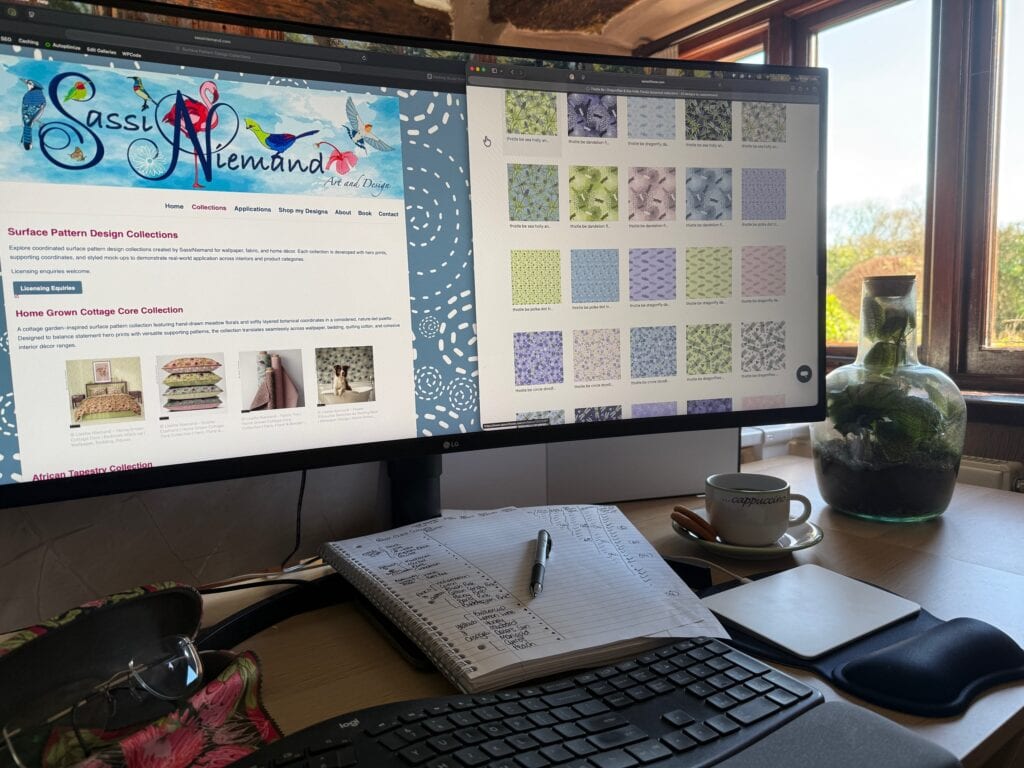
I’ve been revisiting my Spoonflower shop with fresh eyes. Renaming designs so they’re clearer. Grouping colourways more intentionally. Thinking about collections as cohesive stories instead of individual uploads.
When I first started, my focus was simply on finishing a design and getting it live. And there’s nothing wrong with that, it’s exciting, and it’s how I learned. But over time I realised that uploading as I went, without thinking about long-term structure, made things harder to manage later.
Now I’m thinking differently. Instead of “design complete → upload immediately,” I’m looking at how each piece fits into a bigger collection, how it sits alongside coordinates, and how the shop feels as a whole.
It’s not about perfection, it’s about cohesion. For me, creative organisation starts with seeing the bigger picture rather than just the next upload.
Cleaning Up My Contrado Collections
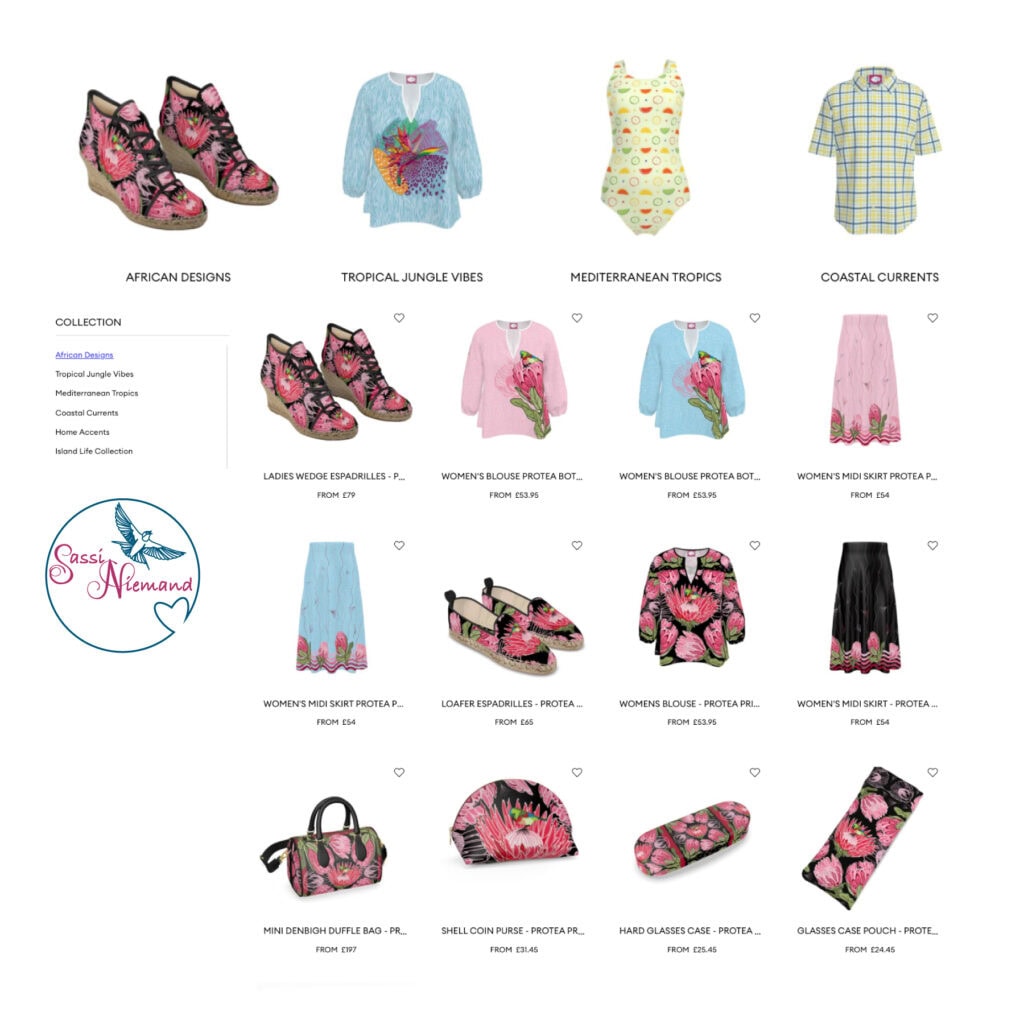
On Contrado, I’m focusing on consistency and clarity. Making sure collection categories are clearly defined. Checking that product titles follow the same structure. Aligning how things are presented with how I talk about them on Pinterest.
Small inconsistencies don’t always look obvious at first, but over time they create friction. I’ve learned this the hard way. Some systems aren’t easy to reorganise or reshuffle once they’re established, and redoing things later can be surprisingly time-consuming.
Consistency makes everything feel more organised behind the scenes and, I hope, easier to explore on the front end too. It allows each collection to feel intentional rather than accidental.
Sorting My Master Design Files Properly
File organisation is one of those tasks that’s easy to postpone — until you urgently need something. And then comes the next question: what did I call it? More often than not, I’d saved it inside a folder that covered far too many different ideas or concepts, which made finding it again far harder than it needed to be.
So this month I’m tightening up folder structures, checking that master .ai files are stored properly, confirming backups, and making sure colourway naming makes sense long-term.
It’s not glamorous work. Recently, an unexpected update briefly locked me out of my own computer, and for a moment I genuinely wondered whether I’d lost recent work. Thankfully, everything was intact — but the experience was enough to sharpen my focus. It prompted more regular backups, clearer folder naming, and making sure all essential access details are stored safely in the cloud should anything similar happen again.
Knowing that my files are safe, logically named, and easy to retrieve removes a surprising amount of background stress. Creative freedom is much easier when you’re not hunting for the right version of something.
Future me will be grateful. Good creative organisation doesn’t look dramatic, but it makes everyday work much lighter.
Improving Website Structure
After refreshing my website with a clearer Collections page and Applications menu, I’ve been paying closer attention to how people move through it.
Are there too many clicks?
Is it obvious where to go next?
Does the structure reflect the way I think about my work?
A well-structured website isn’t flashy — but it communicates clarity. It’s often the first place someone encounters my designs, whether that’s a customer browsing or an art director exploring potential collaborations. It needs to feel intuitive, intentional, and easy to navigate.
There’s no shortage of talent in the design world, so presentation matters. Thoughtful structure helps my work stand out for the right reasons — not because it’s louder, but because it’s easier to understand.
As much as I care about beautiful patterns, I care just as much about how they’re discovered.
Planning With Calm Systems (Not Hustle)
This might be the most important shift.
I’m defining what “enough” looks like each month. Choosing one or two focus areas instead of ten. Keeping Pinterest consistent without reinventing it every week. Allowing space for creativity without layering on unnecessary pressure.
A mentor I follow once suggested listing only three things to accomplish in a day. If something feels big, break it down — but always include something that keeps the needle moving forward. I’ve found that approach quietly powerful. It replaces overwhelm with clarity.
Structure isn’t about control.
It’s about protecting creative energy.
The more organised the foundations become, the freer I feel to actually design.
Studio Chocolate Chip Cookies
February often ends up being my quiet (but busy behind the scenes) admin month — planning, renaming files, checking listings, reviewing collections. Making sure I have a strategy for the year ahead. And that kind of behind-the-scenes work feels much nicer with something warm in the kitchen.
So this month’s small studio comfort is a simple chocolate chip cookie recipe. That goes well with my caffeine addiction. Nothing elaborate. Just reliable, comforting, and perfect alongside a cup of tea while reorganising spreadsheets.
🍪 Yummy Chocolate Chip Cookies
February admin afternoons feel much friendlier with something warm in the kitchen. These chocolate chip cookies are soft in the centre, lightly crisp at the edges, and reliably comforting — perfect alongside a cup of tea while reorganising files or reviewing collections.
Makes: about 3 dozen cookies
Prep time: 25 minutes
Bake time: 8–12 minutes
Freezing: suitable
Ingredients
Dry Ingredients
- 1½ cups (190g) plain / all-purpose flour
- ¾ cup (75g) unsweetened cocoa powder, sifted
- ½ tsp baking soda
- ½ tsp salt
Wet Ingredients
- 1 cup (225g) butter, softened
- 1 cup (200g) packed brown sugar
- ½ cup (100g) granulated sugar
- 2 large eggs
- 1½ tsp (7ml) vanilla extract
Add-ins
- 2 cups (340g) semi-sweet chocolate chips
Method
- Preheat oven to 180°C / 350°F. Line baking trays with parchment paper.
- In a bowl, combine flour, cocoa powder, baking soda and salt. Set aside.
- In a large bowl, beat butter and both sugars until light and creamy (about 3 minutes).
- Add eggs one at a time, beating well after each addition. Stir in vanilla.
- Gradually add dry ingredients on low speed, mixing until just combined.
- Stir in chocolate chips by hand.
- Drop dough by heaped tablespoons (about 20ml each) onto prepared trays, spacing about 5cm / 2 inches apart.
- Bake for 8–12 minutes, until edges are set but centres remain slightly soft.
- Cool for 5 minutes on the tray before transferring to a rack.
Studio Tip
The cookies should look slightly soft in the centre when you remove them — they’ll continue to firm up as they cool. Real vanilla makes a noticeable difference.
Variation
Replace semi-sweet chocolate chips with milk chocolate chips for a sweeter finish. (I recommend this swap!)
There’s something reassuring about a reliable recipe. You follow a few clear steps, trust the process, and it works. In many ways, that’s what I’m aiming for in my business this year too — simple systems, clear structure, and steady results.
A Little More Structure, A Little Less Stress
None of these changes are dramatic.
But together, they make my business feel steadier. Calmer. Easier to run.
And that feels like the right kind of progress for February.
If you’re refining things behind the scenes too, I hope this is your reminder that small structure shifts can make a big difference. Creative organisation doesn’t have to be overwhelming — sometimes it’s just one small improvement at a time.